Connections
Connect anything with a web API.
Add a system once with its credentials. Poh, your pages and your automations can all use it, and nobody, including the AI, ever sees the secret.
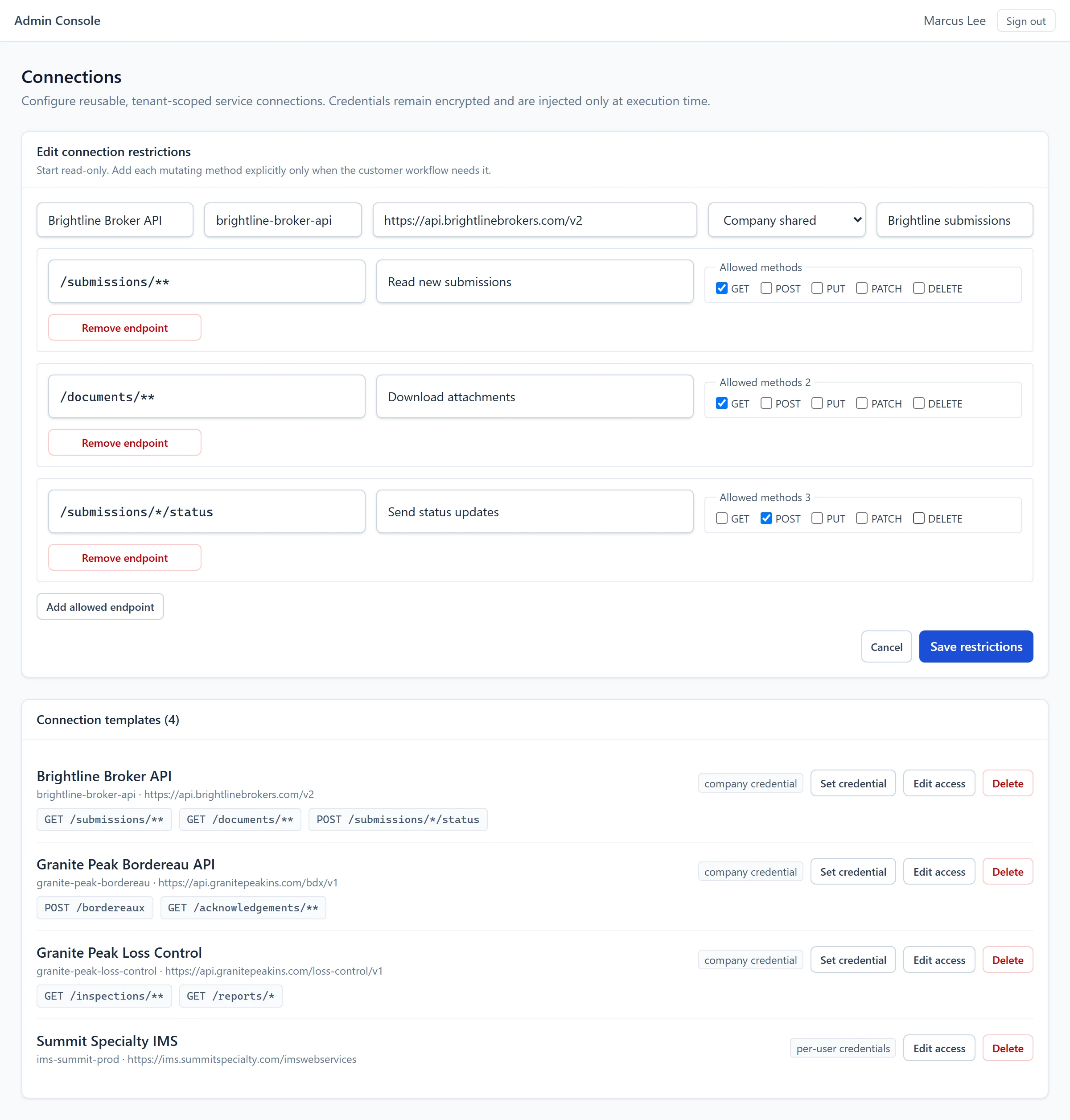
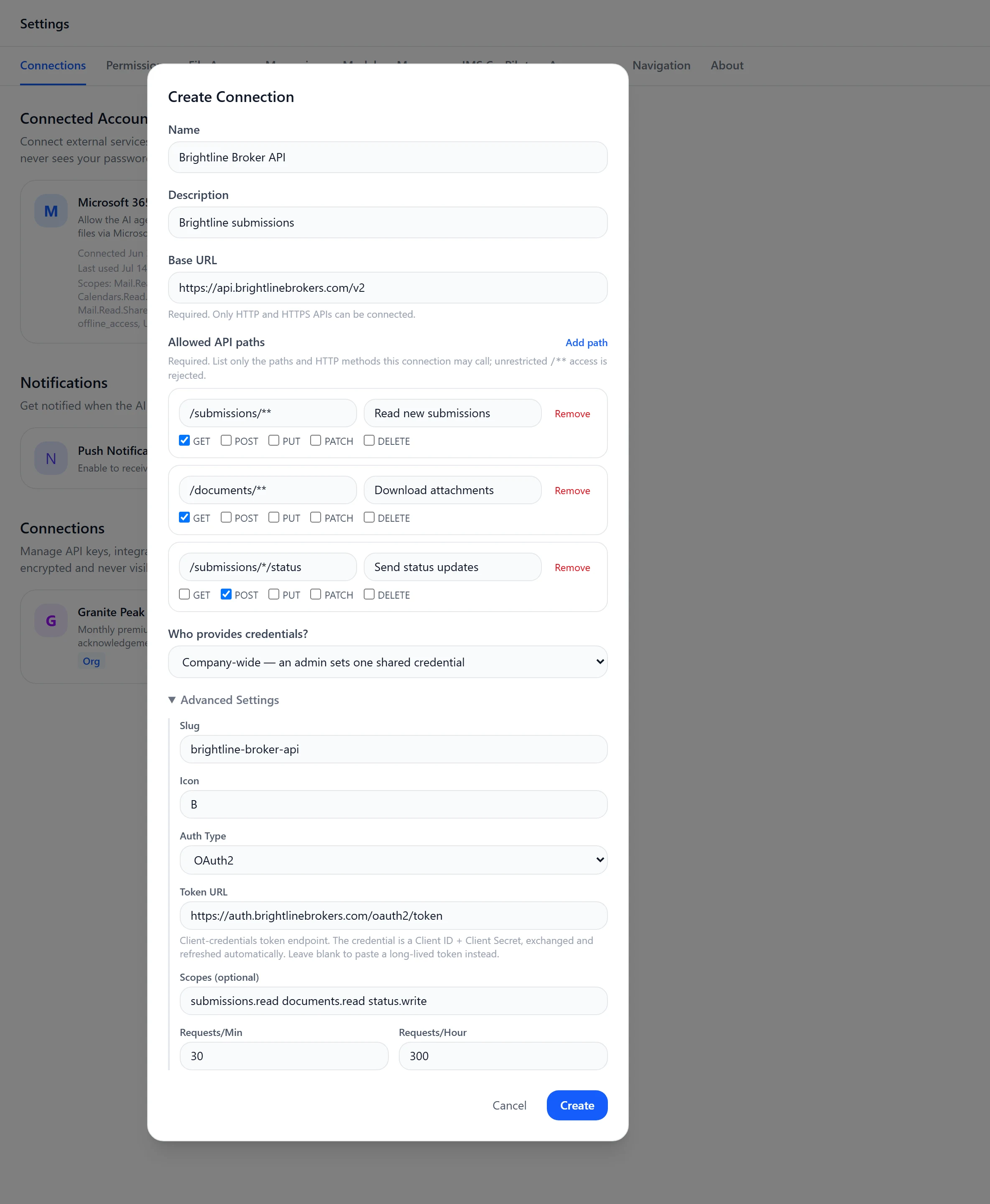
What a connection is made of.
Four settings decide what Poh can reach in a system and how it signs in.
Base URL
Where the system lives. Every call goes to this address and nowhere else.
Allowed paths
The parts of the API Poh may call. Anything outside the list is refused.
Methods per path
Read-only on one path, a create on another, nothing more than you allow.
Credential
An API key, basic sign-in or OAuth 2.0 client credentials, encrypted and never shown to the AI.
Safe by construction
Encrypted vault
Credentials are encrypted with AES-256-GCM and kept out of every prompt.
Allowed endpoints only
Calls outside the list are refused.
Writes need approval
In a conversation, Poh asks before a call changes anything in the other system. Automations are approved when they’re set up.
Personal or shared
Connect for yourself, or set one up for the whole team.
Microsoft 365
Mail, calendar, OneDrive files and people search, per person.
Approved websites
Administrators choose the outside websites your pages and chat modules may load.
How it works
Add the system
Its address and how it signs in: an API key, basic sign-in or OAuth 2.0 client credentials.
Allow the endpoints
List exactly which parts of the API Poh may call.
Use it everywhere
Poh reads through it. In a conversation, anything that writes through it waits for an approval card; an automation is approved when it is set up.
Onboarding
Your other systems, onboarded with you.
If a system has a web API or a SQL Server or PostgreSQL database behind it, Poh can work with it. We scope each new system with you before it goes live.
- API key, basic or OAuth 2.0 client credentials
- Secrets never shown to the AI
- Approval before writes in a conversation
- Audited like every action
Tell us what else you run.
We'll connect Poh to your systems and work real examples with your team.